


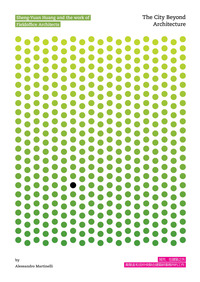
The city beyond architecture. Sheng-Yuan Huang and the work of Fieldoffice architects. Ediz. a colori
Il prezzo originale era: 39,00€.37,10€Il prezzo attuale è: 37,10€.
Architettura: pratica professionale . Arte e architettura del paesaggio
Autore: Alessandro Martinelli
Editore: Listlab
Collana: Meridiano 120
Solo 1 pezzi disponibili
Il mondo di oggi sta cambiando. Il centro dello sviluppo si è spostato in Asia, dove vive già più della metà della popolazione mondiale. In futuro, gli insediamenti asiatici saranno semplicemente più numerosi di quelli degli altri continenti. E, cosa più interessante, questo “boom urbano” non ha nulla a che fare con ciò che è accaduto in Occidente, dove il suburbanismo è finito per dominare il paesaggio e la vita della maggior parte delle persone. In Asia, gli usi del suolo si mischiano gli uni con gli altri e si può facilmente trovare produzione agricola a fianco ad abitazioni, templi o fabbriche high-tech. È un nuovo tipo di mixitè e, se ben gestito, potrebbe essere molto più sostenibile di una qualsiasi periferia europea. In questo contesto, c’è un’altra cosa che ha iniziato a svilupparsi, ovvero uno spazio pubblico in grado di strutturare questo paesaggio e fornire sia spazi sociali che identità alla comunità che vi vive. In un certo senso, in Asia si sta ora sviluppando ciò che il landscape urbanism teorizza da tempo. Qui è però una questione concreta, soprattutto in luoghi come Taiwan, dove è possibile una qualche forma di democrazia diretta. In un certo senso, sta succedendo qualcosa di simile a ciò che é successo all’inizio della scuola ticinese nel sud della Svizzera, o ai tempi delle Olimpiadi di Barcellona in Catalogna, quei rari casi di city-making dove sono state sviluppate innovazioni chiave nella pianificazione e nel progetto. Detto ciò, questa new wave asiatica è qualcosa che parla di ciò che potrebbe diventare la cultura del design della maggior parte dell’urbanizzazione futura del mondo. Sheng-Yuan Huang e i suoi colleghi di Fieldoffice sono l’avanguardia di questo movimento, il quale sta producendo una nuova forma di vita collettiva in termini di design e cultura dell’abitare. Sono anche quelli che oggi sperimentano nuovi sistemi di pianificazione e progettazione, sperimentazioni da cui imparare cos’è la città oggi e come possiamo trasformare il paesaggio. Alla luce di ciò, il libro è un primo tentativo di inquadrare il loro lavoro in termini di city-making, ma anche evidenziarne quegli aspetti che possono offrire riferimento agli urbanisti e ai progettisti di tutto il mondo. . The world of today is changing. The center of development has moved to Asia, where more than half of the world urban population is already living. In the future, Asian settlements will simply outnumber the ones of the other continents. And, most interestingly, this urbanization has nothing to do with what happened in the Western world, where suburbanism has finally come to dominate the landscape and the life of most of the people. In Asia, activities are all mixed, and one can find agricultural production sitting side by side with the housing, temples, or high tech factories. It is a new kind of mixitè and, if properly managed, it looks the like of something more sustainable than a European periphery. In this context, there is another thing that just started to develop, a public space capable to structure such particular landscape and provide both social spaces and a sense of identity to the communities living these places. In a way, it is now developing what landscape urbanism has been theorizing for some time. But here, it is a concrete matter, especially in places the like of Taiwan, where some form of direct democracy is possible. In a way, it is the like of what happened at the onset of the Tessiner school in South Switzerland, or at the times of the Barcelona Olympics in Catalonia, those rare occurrences of city-making, when innovations of planning and design are put forward. But here, it is something that speaks about what the design culture of most of world future urbanization could become. Sheng-Yuan Huang and his colleagues of Fieldo ce are the avantgarde of this architectural movement, that is producing a new form of collective living in terms of design and culture. They are also those that today do test new planning and design systems, experiments from where to learn about what the city is and how we can transform the landscape. In the light of this, the book is a first attempt to frame the work of Fieldoffice in terms of city-making, but also to highlight those concrete aspects of the process that can o er reference to the urban planners and designers around the world.
Cod: 9788832080117
| Peso | 848 g |
|---|---|
| Dimensioni | 27 × 170 × 240 mm |
| Autore | |
| Editore | |
| Anno | |
| Pagine | |
| Collana | |
| Formato |
Recensisci per primo “The city beyond architecture. Sheng-Yuan Huang and the work of Fieldoffice architects. Ediz. a colori”
Prodotti correlati





Recensioni
Ancora non ci sono recensioni.